Animal Faces with Cat Dog Rabbit Bird D
When I first opened Animal Faces with Cat Dog Rabbit Bird D, I was immediately struck by how clean and intentional the linework felt. This is not one of those overly detailed illustration sets that looks impressive on screen but turns into a muddy mess once it hits a needle and thread. The stylized faces here are stripped down to their essential shapes, and that restraint tells me the designer understood something important: embroidery is not print. What reads well on a digital mockup often fails at the sewing table. This set, with its simple black and white vector approach and playful mood, lands on the right side of that divide.
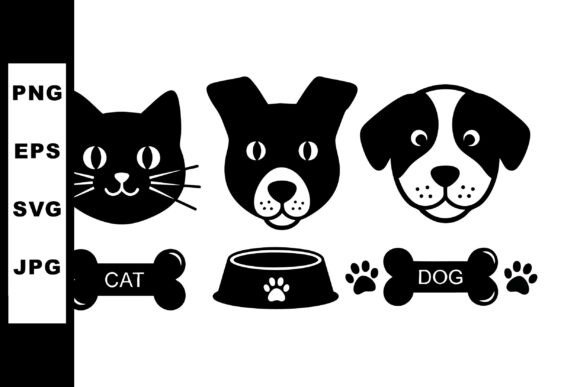
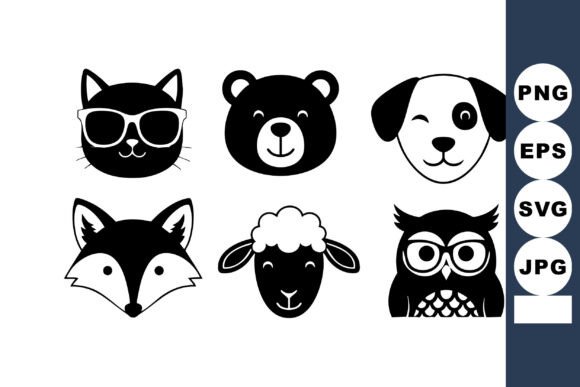
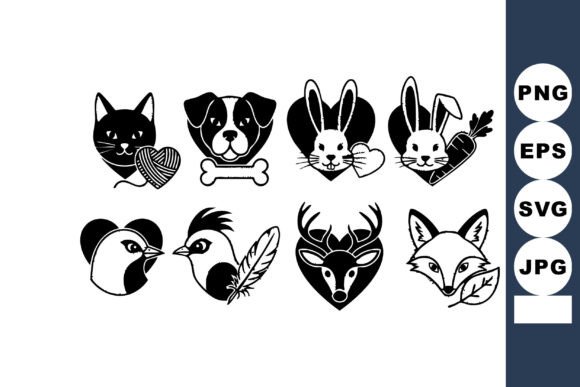
The collection covers six animals—cat, dog, rabbit, bird, deer, and fox—and each face comes with a small accessory that gives it personality. A cat with a ball of yarn, a dog with a bone, a bird with a feather, a deer with a leaf. These are not random additions. They function as visual anchors that make each design feel like a finished thought rather than just a head floating in space. As someone who has tested hundreds of embroidery files for real client projects, I can tell you that this kind of thoughtful composition makes a real difference when you are stitching across different product surfaces.
First Look at This Playful Animal Set
The overall mood of Animal Faces with Cat Dog Rabbit Bird D is warm, approachable, and slightly whimsical without tipping into cartoonish. That is a hard balance to strike. Many animal face designs aimed at the craft market go too cute and end up looking generic or dated within a season. This set avoids that trap. The faces feel modern and clean, with enough character to be memorable but enough simplicity to work across a wide range of projects. I could see these designs fitting naturally into a boutique baby clothing line, a pet accessory shop, a children's book illustration package, or even a home decor collection aimed at young families.
Because the designs are delivered as vector graphics, you have the flexibility to scale them without losing sharpness. This is critical for embroidery use. A design that looks balanced at four inches wide may feel cramped or too sparse at two inches. With vector source files, you can test different sizes before committing to a specific hoop size or garment placement. I always recommend that embroidery designers and small shop owners do this early in their workflow rather than after they have already digitized or ordered samples.
Testing It on a Real Custom Tote Bag Project
I decided to test Animal Faces with Cat Dog Rabbit Bird D on a project I was preparing for a local boutique. They wanted a run of custom cotton tote bags with animal faces for a spring market. Each bag needed a single animal face centered on the front panel, stitched in black thread on natural canvas. I selected the fox face with its leaf accessory as the sample. The geometry of the fox face is clean and open, and the leaf adds a small secondary shape that gives the design visual weight without complicating the stitch path.
On the tote bag, the design stitched cleanly and quickly. The open areas meant there was no risk of thread buildup or puckering on the medium-weight canvas. The simple outlines worked well with a basic running stitch for the main contours and a slightly denser fill around the eyes and nose. The leaf accessory stitched as a standalone element that framed the face nicely. I showed the finished bag to the boutique owner, and she immediately asked if she could order all six animals as individual SKUs. That response confirmed what I suspected: this set has real commercial appeal for handmade product lines.
For an Etsy seller or craft business owner, the ability to offer six distinct designs from one download is a practical advantage. You can create a cohesive product family with the same stitching style, thread color, and placement across different items. That consistency builds brand recognition fast, especially when you are selling at craft fairs or building an Instagram shop presence.
How the Design Behaves in Different Embroidery Situations
I took the same fox design and tested it on a few other surfaces to understand its limits. On a cotton sweatshirt, the design held its shape well through the stretch of the knit fabric, provided I used a medium-weight cutaway stabilizer. The simple black linework did not distort during hooping or stitching. On a lightweight baby onesie, I scaled the design down to about two and a half inches wide. At that size, the face remained readable, though the leaf accessory started to feel small. If you are stitching for newborn or infant apparel, I would consider using only the larger faces or omitting the smallest accessories to keep the design clear at tiny sizes.
On a structured cap, I ran into a predictable challenge. Curved surfaces always test the limits of any embroidery design. The fox face itself stitched well on the front panel of a baseball cap, but the leaf accessory, being an asymmetrical detail, sat slightly off-center depending on how the cap was hooped. This is not a flaw in the design, but something to be aware of if you plan to stitch these on hats. I would recommend testing placement carefully and considering whether the accessory adds enough visual value to justify the extra alignment work. For some products, you may prefer to stitch just the face without the accessory, and the vector format makes that easy to adjust.
On a wool blend blanket, the design looked excellent. The simple shapes stitched cleanly without pulling or distorting the fabric, and the black thread stood out well against the lighter background. This is where the design truly shines. Home decor items like baby blankets, nursery pillows, and decorative towels benefit from designs that are bold enough to read from a distance but detailed enough to feel special up close. Animal Faces with Cat Dog Rabbit Bird D delivers on both counts.
Where You Should Use This Design with Care
As much as I appreciate this set, I have to be honest about where it needs extra consideration. The simple black and white aesthetic is elegant, but it relies on good thread contrast. On dark fabrics like black, navy, or deep charcoal, a black thread will disappear. You will need to switch to a lighter thread color or a metallic thread to make the design visible. The vector format allows you to recolor the linework easily in your design software before digitizing, so this is not a dealbreaker—just a step you should not skip.
On highly textured fabrics like terry cloth, fleece, or thick knits, the fine lines of the running stitches may sink into the surface and lose definition. I recommend testing a small sample on your actual fabric before committing to a production run. If the fabric is too textured, consider increasing the stitch density slightly or using a heavier thread weight to improve visibility. The same caution applies to stretchy fabrics like ribbed knits or spandex blends. Without proper stabilization, the design can distort during stitching, especially around the narrow features like the bird's beak or the cat's whiskers.
Small hoop sizes are another factor. If you plan to stitch these on keychains, zipper pulls, or tiny patches, some of the finer details may become difficult to read. The bird face with its feather accessory, for example, has a delicate silhouette that works best at three inches or larger. For small products, I would select the cat or fox face, which have chunkier shapes that hold up better at reduced scale.
What This Design Does for Your Product Line and Customer Trust
From a business perspective, Animal Faces with Cat Dog Rabbit Bird D offers a strong foundation for building a themed product collection. Customers who buy one animal often come back for the rest. That repeat purchase behavior is exactly what small shop owners and Etsy sellers need to sustain momentum. The playful and friendly mood of these designs makes them suitable for personalized gifts, holiday presents, baby shower items, and pet lover merchandise. I can easily imagine a seller using these for embroidered tea towels, canvas pouches, mini tote bags, sweatshirts, and even embroidered patches sold individually or in sets.
The simplicity of the black and white linework also helps with customer trust. When a buyer looks at a listing photo showing a clean, readable design stitched on a real product, they instantly understand what they are getting. There is no confusion about thread colors, no worry that the design will look different in person. That clarity reduces returns and increases positive reviews. For handmade product businesses, every stitch builds buyer confidence. A design that stitches cleanly every time is a design that makes your job easier.
Because these are vector illustrations and not pre-digitized embroidery files, you have full control over the final stitch path. That means you can adapt the design to your specific machine, hoop size, and fabric type. This flexibility is valuable for commercial embroidery work where each order may require slight adjustments. It also allows you to offer custom color variations without starting from scratch.
Practical Notes from the Embroidery Table
Before I wrap up, let me share a few practical notes I always keep in mind when working with designs like this one. First, test on scrap fabric before you stitch your first product. This is the single best advice I can give any embroidery designer or small business owner. A five-minute sample test will tell you everything you need to know about stitch density, thread tension, stabilizer choice, and hoop fit. It saves you from wasting time and materials on a production batch that does not meet your standards.
Second, check your thread color contrast against your actual fabric in natural light. Black thread on white fabric is a classic look, but if your fabric is off-white, cream, or ecru, the contrast will be softer. You may prefer a slightly darker thread or a different finish. The same applies if you want to stitch on colored fabrics. I recommend keeping a small set of test swatches with different thread colors and fabric backgrounds so you can compare quickly.
Third, review the stitch density for each face before you digitize. Open, simple shapes like these generally digitize well, but if you plan to fill larger areas with satin stitch or column stitch, check that the density settings match your fabric. Overly dense stitching can cause puckering on lightweight fabrics. Under-filled areas may look uneven. A balanced fill with clear outlines is the sweet spot.
Fourth, confirm your hoop size. These designs can be scaled, but scaling too far beyond the original proportions can change the line thickness ratio and affect how the accessory elements relate to the face. Keep your scaling moderate, especially for the smaller animals like the bird and the rabbit.
Fifth, if you are selling finished products using this design, verify the licensing terms for commercial use. The product listing describes it as vector illustrations and graphics for download. Most design assets in this category allow commercial use in finished products, but you should always confirm whether you can sell items with the design, use it for digital product previews, or include it in a printable mockup. When in doubt, contact the seller directly. Protecting your business from licensing issues is worth the extra step.
Final Thoughts Before You Download
Animal Faces with Cat Dog Rabbit Bird D is a solid choice for embroidery designers, handmade product sellers, and creative entrepreneurs who want a clean, playful, and commercially viable set of animal motifs. The black and white vector format gives you flexibility, the six variations offer product line potential, and the simple linework translates well into real stitching across a range of fabric types and product categories. It is not a design set that tries to do everything at once. It knows what it is: a friendly, modern, and stitch-ready collection of animal faces that will look good on tote bags, sweatshirts, baby items, patches, and home decor.
If you are an Etsy seller building out a spring collection, a craft business owner planning gifts for the holiday season, or a hobbyist looking to make personalized presents for friends and family, this set is worth a close look. Just remember to test your fabric, check your hoop size, and confirm the licensing before you start. A little preparation goes a long way toward making your final product feel professional, polished, and ready for the customer who will love it.