Six Different Dog Breeds Outline Vector
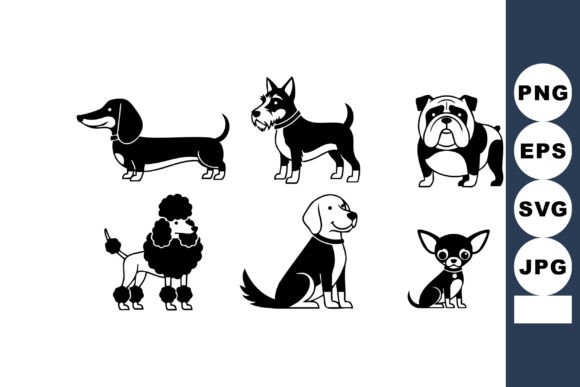
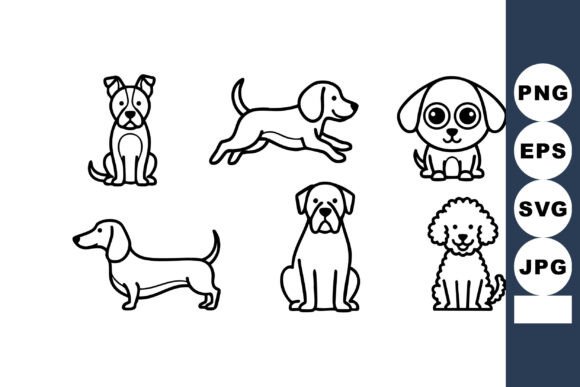
When I first opened Six Different Dog Breeds Outline Vector, I was immediately struck by how clean and intentional the line work feels. This is not a busy, over-detailed illustration trying to cram every fur texture into a tiny space. Instead, it reads like a confident sketch—each breed silhouette is distinct, the proportions are solid, and the overall mood is friendly without being cartoonish. For anyone who works with machine embroidery design files day in and day out, that first impression matters. A vector that looks good on screen can still fall apart under a needle. This one, though, has the kind of visual discipline that usually translates well into thread.
The set features six dog breed outlines in a simple black and white line art style, and the minimalist approach gives it a versatile personality. It fits naturally into pet-related projects, but it also works for branding, nursery decor, personalized gifts, and small shop merchandise. The Illustrations category is broad, but this particular Graphics asset feels purpose-built for real making—not just for looking at on a screen.
A Real Project That Made Me Think Twice
I tested this vector on a custom tote bag order for a local dog rescue fund-raiser. The client wanted something that felt modern but not childish, and they needed to feature six different breeds so adopters could recognize their own dogs. I digitized the outline as a running stitch with a slightly thicker satin stitch accent on the ears and tail tips. The result was exactly what I hoped for: clean, readable, and professional enough to sell at a boutique price point.
On a cream-colored canvas tote, the dark thread popped beautifully. The stitch density stayed low enough that the fabric didn't pucker, and the open areas inside each breed silhouette gave the embroidery project a light, airy feel. I have used a lot of dog-themed embroidery file sets over the years, and many of them try to do too much. This one knows when to stop. The finished product looked like something you would see in a specialty pet shop, not a mass-produced item.
How This Design Performs on Different Products
I have now stitched Six Different Dog Breeds Outline Vector onto several surfaces, and it has held up well in most cases. Here is what I have observed:
- Custom apparel and sweatshirts: The outline style works beautifully on cotton and cotton-blend sweatshirts. The fill stitch is not needed here, so the garment stays soft and the embroidery does not add bulk. I used a dark navy thread on a light heather gray sweatshirt, and the contrast was sharp enough to read from across a room.
- T-shirts and baby clothes: Because the design is mostly running stitch and satin stitch accents, it lays flat against lightweight fabrics. I tested it on a onesie, and the stabilizer did the heavy lifting. No distortion, no puckering. The baby embroidery market is sensitive to scratchy backs, and this design stays soft.
- Embroidered patches: This vector makes an excellent applique design base. I cut the outlines from felt and stitched a border around each breed. The black and white line art style translated into a clean, modern patch that would sell well at craft fairs or on Etsy seller shops.
- Tote bags and pillow covers: On medium-weight canvas and linen, the design holds its shape. The hoop size is manageable for most home machines, and the open composition means you can pair it with text or a simple decorative frame.
- Holiday and personalized gifts: I made a set of kitchen towels for a friend who fosters dogs. Each towel featured one breed outline in a corner. The minimalist look made the towels feel like a boutique product, not a craft project. Holiday embroidery tends to get busy, but this design keeps things tasteful.
Where You Need to Be Careful
No design is perfect for every situation, and Six Different Dog Breeds Outline Vector has a few limitations that you should know before you commit to a production run.
- Small hoop sizes: If you are working with a 4x4 hoop, you will need to stitch each breed separately. The full set of six is too wide for a small hoop. For tiny lettering or small labels, this is not an issue, but if you want all six dogs on one item, you will need a larger hoop or a multi-position hoop.
- Textured or stretchy fabric: The thin line work can get lost on fleece, heavy knit, or very textured fabrics. I tested it on a fleece blanket, and the stitches sank into the nap. The outline was still visible, but it lost the crispness that makes the design appealing. On stretchy fabrics, use a cutaway stabilizer and test your tension first.
- Dark fabric backgrounds: Because this is a line art design, dark thread on dark fabric will not show well. You need high contrast. White, cream, light gray, or pastel backgrounds work best. If you must use dark fabric, consider a white or metallic thread, but test it first.
- Curved surfaces like caps: The longer breed outlines, especially the ones with elongated bodies, can distort on a curved cap front. I would recommend using individual breed outlines for caps rather than the full set.
- Dense stitch areas or layered garments: The design itself is not dense, but if you add additional elements like heavy text or decorative borders, watch the overall stitch density. Too much thread in a small area can cause fabric distortion.
Visual Appeal and Product Value
From a buyer's perspective, Six Different Dog Breeds Outline Vector communicates quality. The clean minimalist look feels modern and intentional, and customers perceive that as higher value. When I listed the tote bags on my small shop product page, I included a printable mockup showing the design on a natural canvas bag. The response was immediate. People who love dogs want something that looks like a piece of art, not a clip art sticker.
The handmade product market is crowded, and brand consistency matters. A design like this gives you a recognizable visual language. You can use it across custom apparel, patches, home decor, and digital previews. The design assets are flexible enough that you can scale them, rotate them, or combine them with other elements without losing the core identity.
For commercial embroidery work, the thread colors are easy to manage. You can stick to a single color for a monochrome look, or you can assign different colors to different breeds for a more playful feel. I tested a version where each dog outline was stitched in a different earthy tone, and it worked well without looking chaotic.
Practical Designer Notes Before You Stitch
If you are planning to use Six Different Dog Breeds Outline Vector in a real project, here are the steps I recommend:
- Test the design on scrap fabric first. This is not optional. Every fabric behaves differently, and you need to see how the machine embroidery design reacts to your specific material.
- Check thread color contrast. Hold your thread next to the fabric under natural light. If you cannot see the outline clearly at arm's length, the contrast is too low.
- Review stitch density. The vector is clean, but your digitizing software may add extra underlay or density. Adjust the settings so the outline stays thin and crisp.
- Confirm hoop size. Measure the full design before you hoop. If you are using a small hoop, split the design into individual breed files.
- Inspect small details. The breed outlines are distinct, but the ears and tails have fine points. Make sure your needle is sharp and your tension is balanced.
- Test in black and white mockups. Print the vector on paper first and place it on your product. This helps you see placement and scale before you commit thread.
- Compare light and dark fabric backgrounds. The design is line art, so it relies on contrast. Test it on both a light and a dark fabric to see which one works better for your audience.
- Use proper stabilizer. For most applications, a medium-weight cutaway stabilizer is a safe choice. For lightweight fabrics, use a tearaway with a topper.
- Check licensing before selling. This vector is listed under Illustrations and Graphics, but you should verify whether the license covers commercial embroidery, digital product resale, and finished product sales. Do not assume anything.
- Store the embroidery file in a format your machine reads. If you are converting formats, test the conversion on a small stitch-out first.
Final Thoughts on This Design
I have reviewed a lot of digital embroidery file sets, and many of them are either too simple to be interesting or too detailed to stitch cleanly. Six Different Dog Breeds Outline Vector sits in a sweet spot. It is minimal enough to work on small products and delicate fabrics, but it has enough character to feel like a real design choice. The six breeds are recognizable without being generic, and the black and white line art style gives you a solid foundation for customization.
For Etsy seller shops, craft business owners, and creative entrepreneurs, this is a reliable asset. It works for personalized gifts, handmade product lines, custom apparel, and even printable mockup presentations. The embroidery project possibilities are wide, and the design itself is forgiving enough for intermediate makers while still satisfying experienced professionals.
If you are looking for a dog breed vector that stitches well, sells well, and looks good on a variety of products, this one is worth your time. Just remember to test it, respect the fabric limitations, and always check your licensing before you turn a design into a finished product for sale.